

Training, without guesswork
Applied Physiologics exists to bridge the gap between exercise science and real-world training—without over-complication, and without noise.
Our core principle
The human body adapts to the loads placed on it.
Too little, and it declines. Too much, and it breaks.
Effective training lives in between—where lasting progress is cultivated by applying stress with intent over time.
Applied Physiologics is built on one idea:
Training should be clear, adaptable, and grounded in human physiology—not trends.
Problems in modern training
-
Overcomplicated programming
-
Frequent program switching
-
Lack of clear progression structure
-
Outcomes are expected without a clear path to achieve them
Most people don't suffer from a lack of effort, but from a lack of structure.
A more effective approach starts by applying that structure.

The solution
A grounded approach
Physiology-Driven
Programs are built around how the body actually adapts rather than fitness trends
Environment-Agnostic
Train with what you have — at home, in the gym, or anywhere in between
Progression-Focused
Clear pathways toward measurable change — no random workouts
Sustainable by Design
Programs are structured to be repeatable over time
Built by experience, refined by logic
Applied Physiologics was developed by a Doctor of Physical Therapy and Strength and Conditioning specialist with a background in Cell and Molecular Biology.
Years of working with clients in structured exercise environments revealed a common theme: Most people successfully built consistent exercise habits while under formal guidance. However, they often struggled to maintain those habits independently once that structure disappeared.
These observations sparked a deep interest in sustainable approaches to long-term physical training that could function within real-world schedules, responsibilities, and constraints.
"I wanted a system that was technically proficient, easily understood and accessible with minimal friction."
Applied Physiologics was built on this idea. Exercise systems that prioritize sustainable progression, practical structure, and sound scientific principles.
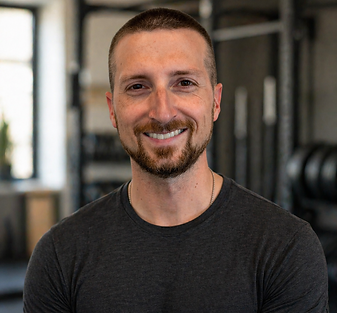
Michael Wahlig
Founder - Applied Physiologics
Professional Credentials
Doctor of Physical Therapy (DPT)
Board-Certified Orthopedic Clinical Specialist (OCS)
Certified Orthopedic Manual Therapist (COMT)
Certified Strength and Conditioning Specialist (CSCS)
B.S. in Cell and Molecular Biology
Designed for long-term participation
Long-term health does not come from short cycles of rehabilitation or extremes in training.
It develops through consistent, well-dosed physical stress applied over time.
That requires more than a program. It requires a structure that supports the behaviors needed to sustain that exposure.
Our system is designed to reduce unnecessary decision-making, reinforce competence, and build confidence in managing physical capacity.
The goal is not constant supervision or external motivation.
It is durable participation—driven by understanding, consistency, and self-efficacy.
Our program design rules
Precision over intensity
Progression over prescriptions
Adaptability over rigidity
Clarity over complexity
Sustainability over haste
Consistency over novelty
Proper movement patterns are mastered before adding load.
Direction matters more than individual starting point.
Programs adjust to real-world constraints without losing structure.
Simplicity enhances execution and consistency.
Long-term improvement is prioritized over short-term output.
Repeated exposure—not random variation—drives adaptation.
Our system works with your constraints, not against them.
Where this approach usually fits
People tend to come to this work at different points.
Often, it’s after trying approaches that were too inconsistent, aggressive, or difficult to sustain. What they’re often seeking is not necessarily a more intense system, but a more stable one — something that can be repeated, adjusted, and maintained over the long term.
Others arrive with a different set of expectations — sometimes centered around rapid change, or training that feels exceptionally novel or demanding. In those cases, this approach can feel unfamiliar, and in some instances, may not be the right fit for them.
We do not aim to direct people toward or away from our system. Instead, we strive to describe it clearly so that they may recognize whether it aligns with their interests.
Training doesn’t need to be complex to be effective.
It just needs to be structured, consistent, and aligned with how the body adapts.
That’s what Applied Physiologics is built to provide.